Hydration Tips After Surgery
Daily fluid goals, best beverages, warning signs of dehydration, and a sample hydration schedule.
Stay Hydrated. Heal Better. Feel Better.
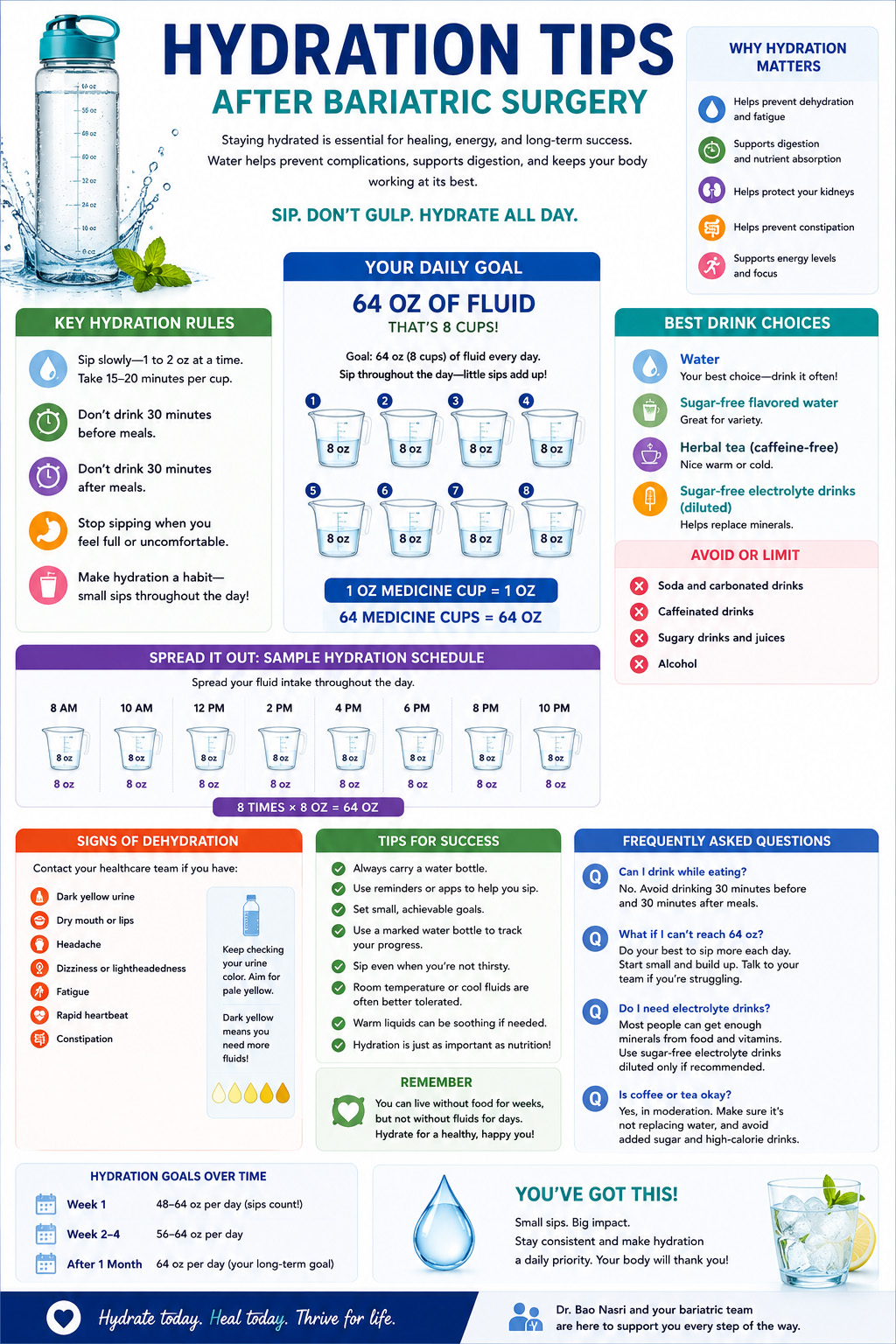
Staying hydrated is one of the most important parts of your recovery after bariatric surgery. Because your new stomach holds much less liquid, drinking enough water takes planning and consistency. Dehydration is one of the most common reasons patients visit the emergency department after bariatric surgery—but it is often preventable with healthy hydration habits.
Why Hydration Matters
Drinking enough fluids helps:
Your Daily Fluid Goal
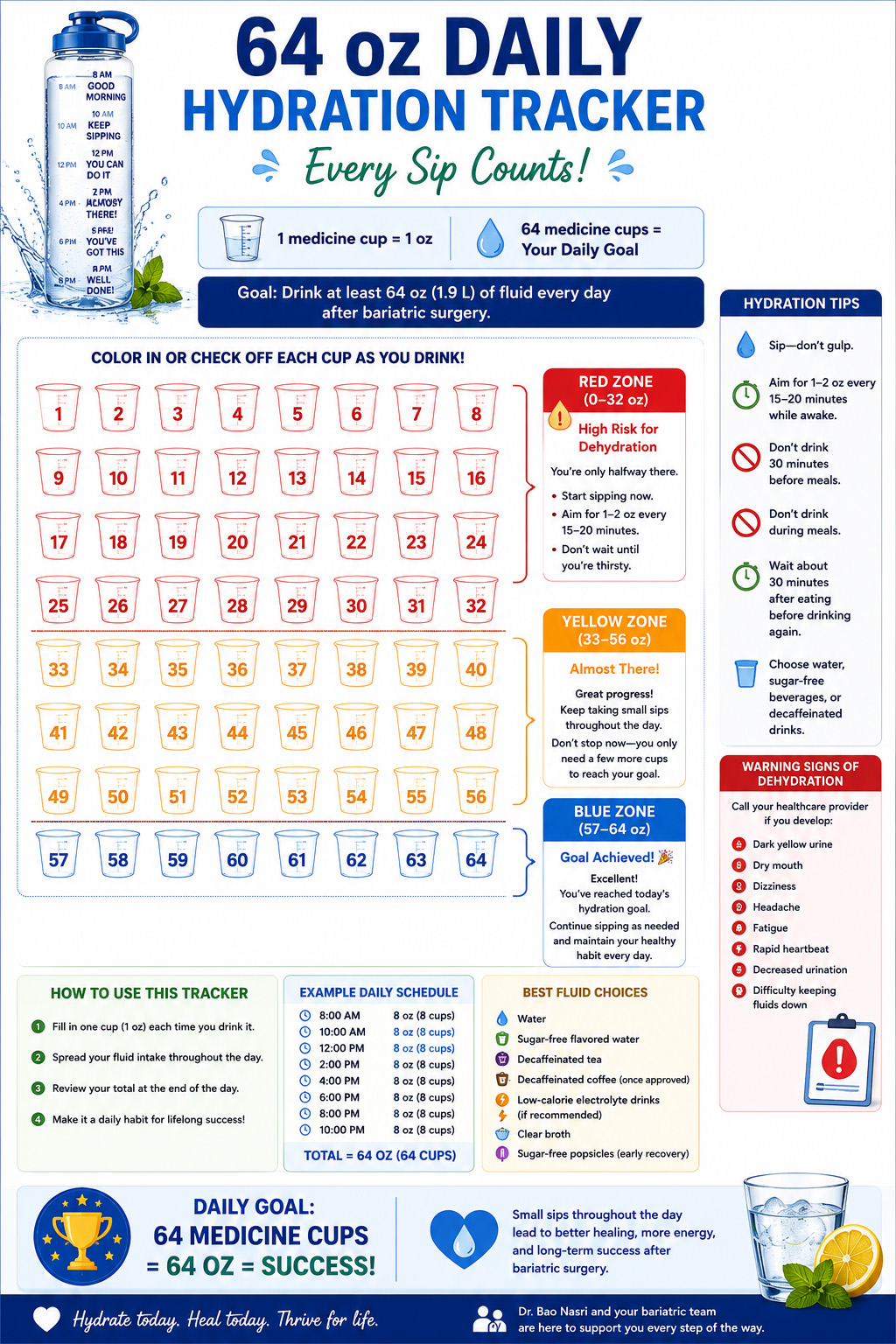
At Least 64 oz (1.9 Liters) Every Day
Most patients should aim to drink at least 64 ounces of sugar-free, non-carbonated fluids each day. During the first few weeks after surgery, reaching this goal may be challenging. The key is to sip continuously throughout the day, rather than trying to drink large amounts at once.
Sip, Don't Gulp
Your new stomach cannot comfortably hold large amounts of liquid. Instead:
- Take small sips
- Drink slowly
- Aim for 1–2 ounces every 15–20 minutes while awake
Small sips throughout the day are much easier to tolerate than trying to drink an entire bottle at once.
Best Fluids to Drink
Choose beverages that are:
- Water
- Sugar-free flavored water
- Decaffeinated tea
- Decaffeinated coffee (once approved)
- Low-calorie electrolyte drinks (if recommended)
- Clear broth
- Sugar-free popsicles (during early recovery)
Drinks to Avoid
- Carbonated beverages
- Sugary drinks
- Juice
- Regular soda
- Alcohol
- High-calorie coffee drinks
Carbonated drinks may cause discomfort and bloating, while sugary beverages can slow weight loss and increase calorie intake.
When Should I Drink?
A simple rule to remember:
- 🚫 Do not drink 30 minutes before meals
- 🍽️ Do not drink during meals
- 🚫 Wait about 30 minutes after meals before drinking again
This helps prevent overfilling your stomach and allows you to eat enough protein during meals.
Signs of Dehydration
Contact your healthcare provider if you experience:
- Dark yellow urine
- Dry mouth
- Thirst that does not improve
- Dizziness or lightheadedness
- Fatigue
- Headache
- Rapid heartbeat
- Decreased urination
- Difficulty keeping fluids down
If you cannot keep fluids down for several hours or develop severe symptoms, seek medical attention promptly.
Tips to Reach 64 oz Every Day
- Carry a water bottle wherever you go
- Set reminders on your phone
- Take a sip every few minutes
- Keep water nearby throughout the day
- Use a marked water bottle or hydration tracking app
- Drink between meals—not during meals
- Track your daily fluid intake
Remember: Small sips add up.
Sample Hydration Schedule
| Time | Goal |
|---|---|
| 8:00 AM | 8 oz |
| 10:00 AM | 8 oz |
| 12:00 PM | 8 oz |
| 2:00 PM | 8 oz |
| 4:00 PM | 8 oz |
| 6:00 PM | 8 oz |
| 8:00 PM | 8 oz |
| 10:00 PM | 8 oz |
| Total | 64 oz |
Your schedule may vary depending on your daily routine.
Frequently Asked Questions
Can I drink while eating?
What if I can't reach 64 ounces?
Can I drink coffee?
Are sports drinks okay?
How do I know if I'm drinking enough?
Remember
Hydration is just as important as nutrition after bariatric surgery. Making small, consistent efforts throughout the day can help prevent dehydration, support healing, and improve your long-term success. If you have difficulty meeting your hydration goals or develop signs of dehydration, contact your surgeon or your healthcare team.
Continue reading
Schedule a Consultation